Rodent activity in Placer County accelerates each autumn as native oak woodlands dry up and overnight temperatures drop into the 40s. In communities bordering open space corridors, such as Whitney Ranch, Clover Valley,…
Rodent activity in Placer County accelerates each autumn as native oak woodlands dry up and overnight temperatures drop into the 40s. In communities bordering open space corridors, such as Whitney Ranch, Clover Valley, and neighborhoods along the Sunset Whitney Recreation Area, roof rats utilize mature valley oaks and utility risers to access rooflines. Once on the roof, rats squeeze through uncapped weep screeds, open attic dormers, or gaps around HVAC conduit as narrow as 1/2 inch (the diameter of a quarter). House mice require only a 1/4-inch opening, roughly the size of a standard pencil. These rodents nest inside fiberglass batts, gnawing thermoplastic electrical wire insulation and leaving pheromone-laden fecal runways near central duct systems.
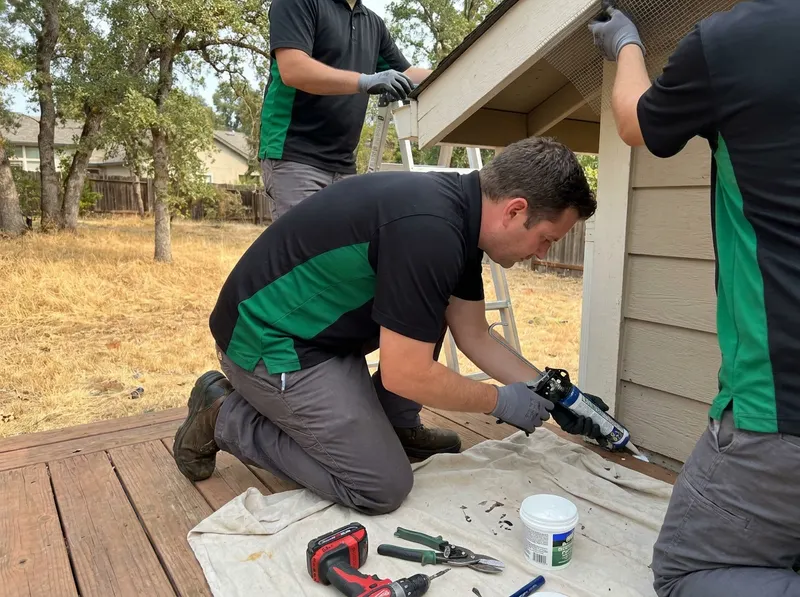
Effective structural defense relies on Integrated Pest Management (IPM) rather than placing bait stations that leave dead animals to decay inside interior drywall cavities. Physical exclusion seals roof junctions, tile mud-caps, and crawl space access panels using 1/4-inch 23-gauge galvanized wire mesh paired with metal flashing. Trapping runs concurrently inside the envelope using industrial mechanical snap traps calibrated to target specific runway lines. For properties with severe attic contamination near Stanford Ranch or Whitney Oaks, insulation sanitization neutralizes biological pathogens without exposing indoor rooms to lingering harsh chemical scents.
Decision-fit guidance depends on the stage of infestation. If noises occur strictly during nocturnal hours between 10 PM and 4 AM, roof rats have established an active attic runway; this requires immediate trapping combined with total roof-line exclusion. If activity is confined to ground-level garages or exterior perimeter planters near Sierra College Valley, targeted exterior rodent stations and foundation sweeps suffice. The primary operational trade-off involves investment depth: basic trapping resolves the immediate population inside 10 days, but without exterior physical sealing, adjacent wild populations will reinvade the warm attic space within 30 to 60 days.
Every job gets a firm, written price after a free on-site visit.
Tell us about your rodent control and exclusion job in Rocklin and we'll send a clear, written quote, usually the same day.
 Virello Pest Management